Warehouses are the backbone of modern supply chains across the UAE. From retail distribution and e-commerce fulfillment to manufacturing and logistics hubs, warehouses handle massive volumes of inventory every day. As businesses grow, inventory becomes more complex, order volumes increase, and delivery timelines become tighter.
In such environments, manual processes like paperwork, spreadsheets, and visual checks quickly become inefficient, error-prone, and costly. Even small mistakes can lead to misplaced inventory, delayed shipments, customer complaints, and financial losses.
This is where warehouse barcode solutions using barcode printers and scanners play a critical role. By automating data capture and inventory movement, barcode systems help warehouses operate with greater accuracy, faster processes, and real-time visibility.
In this article, we explain what warehouse barcode solutions are, how they work, where they are used, and why they are essential for modern warehouse operations in the UAE.
What Are Warehouse Barcode Solutions?
Warehouse barcode solutions are systems that use barcode printers, barcode scanners, and integrated software to track inventory, assets, and movements inside a warehouse.
Instead of writing item details manually, each product or storage unit is identified using a barcode. When an item is scanned, the system automatically records the information, such as quantity, location, and movement status.
This approach replaces manual tracking methods and gives warehouse teams accurate, real-time data at every stage of operation.
How Barcode Identification Works in a Warehouse
Each item in the warehouse is assigned a unique barcode. This barcode acts like a digital identity for that item.
Barcodes can be applied to:
- Individual products
- Cartons and boxes
- Pallets
- Storage racks and bins
Whenever an item moves from one location to another, the barcode is scanned, and the system records the movement automatically.
Why Warehouses in the UAE Are Adopting Barcode Systems
Warehouses in the UAE operate in fast-paced and highly competitive environments. Accuracy, speed, and visibility are essential for meeting customer expectations and maintaining efficiency.
Key reasons driving adoption include:
- Rapid growth of logistics and free-zone warehouses
- Expansion of e-commerce and retail distribution
- Increased demand for same-day and next-day deliveries
- Multi-location and multi-client warehouse operations
- Growing need for traceability and compliance
Manual inventory tracking struggles to keep up with these demands. Barcode systems provide a scalable, reliable, and proven solution.
In regulated sectors such as healthcare and pharmaceuticals, UAE authorities have highlighted the importance of barcode-based tracking to improve traceability and supply chain visibility.
How Warehouse Barcode Solutions Work
1. Barcode Labeling at the Source
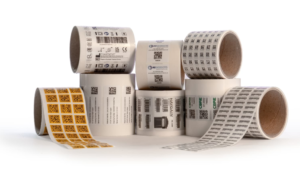
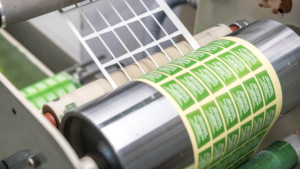
Inventory items are labeled using barcode printers so each item can be identified uniquely.
Labels may be applied to:
- Individual products
- Cartons and boxes
- Pallets
- Storage bins or racks
Each barcode represents a unique identifier that the warehouse system recognizes.
2. Scanning at Every Movement Point
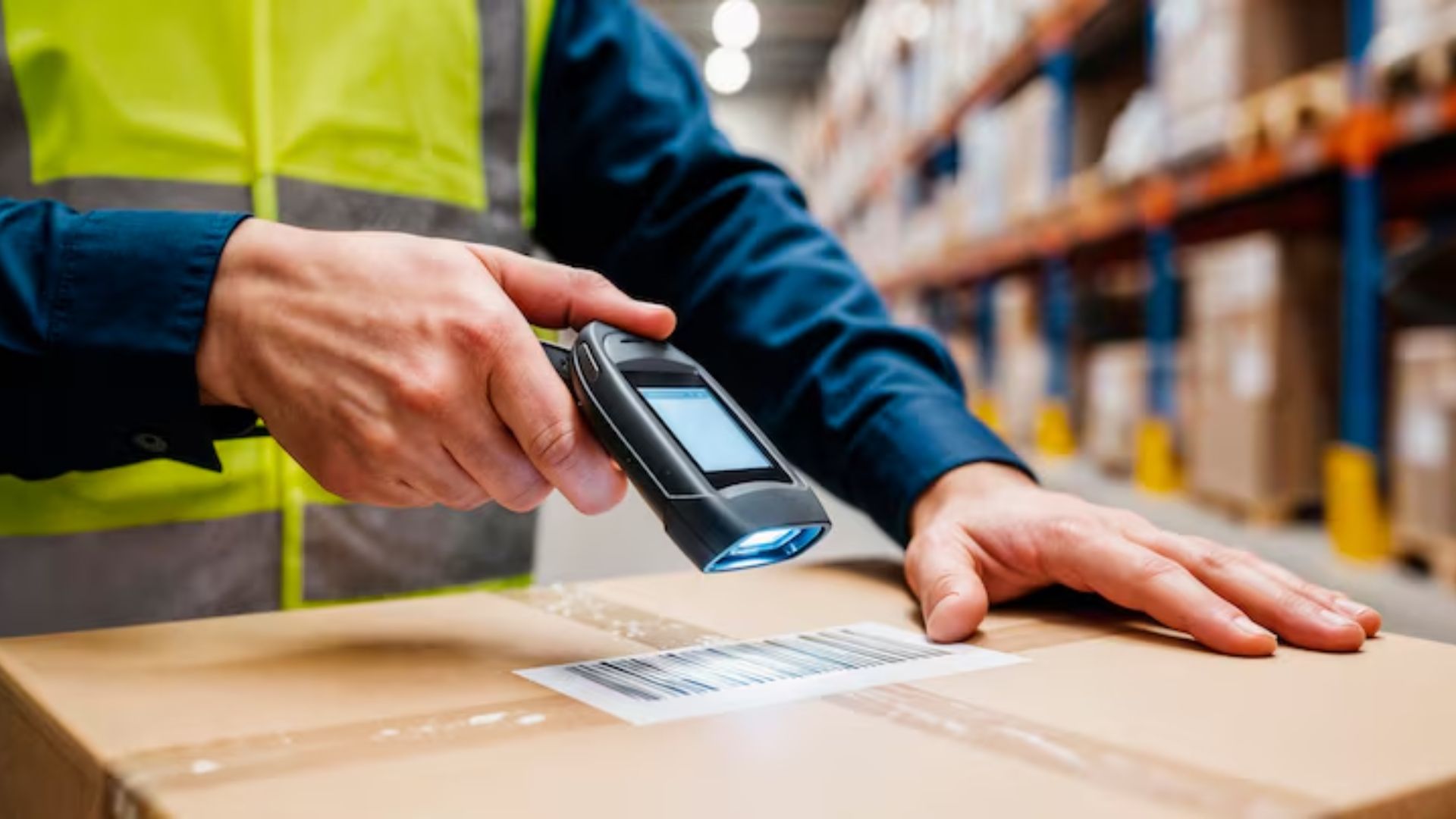
Barcode scanners are used at key warehouse checkpoints to record item movement automatically.
Scanning is done during:
- Goods receiving
- Put-away
- Order picking
- Packing
- Dispatch
Each scan updates the system instantly, removing the need for manual data entry.
3. Real-Time Inventory Updates
Every barcode scan synchronizes data with inventory or warehouse management software.
This ensures:
- Accurate stock levels
- Correct location tracking
- Complete movement history
Warehouse managers can see updated data in real time instead of waiting for reports.
Key Benefits of Warehouse Barcode Solutions
Improved Inventory Accuracy
Barcode scanning eliminates manual data entry, which reduces errors caused by miscounts, wrong entries, or missing records.
Accurate inventory data helps warehouses:
- Avoid stock discrepancies
- Reduce write-offs
- Improve audit accuracy
Faster Warehouse Operations
Barcode scanning speeds up daily warehouse processes such as:
- Receiving shipments
- Order picking
- Stock transfers
- Dispatch verification
This allows warehouses to process higher volumes without increasing manpower.
Real-Time Visibility
Barcode systems give warehouse managers instant access to:
- Current stock levels
- Item locations
- Order status
- Inventory movement history
This visibility helps managers plan better and respond faster to issues.
Reduced Operational Costs
By reducing errors, delays, and rework, barcode systems help warehouses lower operational costs over time.
Barcode Solutions Across Warehouse Functions
Goods Receiving
Incoming goods are scanned as soon as they arrive at the warehouse.
Scanning verifies:
- Correct product
- Accurate quantity
- Supplier reference
This ensures errors are caught early before items enter storage.
Storage and Put-Away
Barcodes are used to assign and confirm storage locations.
When items are moved to racks or bins, scanning confirms the exact location, preventing misplaced inventory and saving retrieval time.
Order Picking
During order fulfillment, pickers scan items to ensure:
- Correct product selection
- Accurate quantities
- Reduced picking errors
This is especially important for warehouses handling many SKUs.
Packing and Dispatch
Before dispatch, items are scanned again to verify:
- Order completeness
- Shipping accuracy
- Destination details
This reduces delivery errors and customer complaints.
Warehouse Barcode Solutions for Different Industries
Retail and Distribution
Retail warehouses use barcode systems to manage:
- Seasonal inventory
- Fast-moving consumer goods
- Multi-store distribution
Barcode tracking supports faster replenishment and accurate stock flow.
Logistics and 3PL Operations
Logistics providers rely on barcode systems for:
- Shipment tracking
- Client-specific inventory control
- Proof of movement
Accurate tracking builds trust with clients and partners.
Manufacturing Warehouses
Manufacturing warehouses use barcode solutions to:
- Track raw materials
- Monitor work-in-progress
- Manage finished goods
This improves production planning and traceability.
Cold Storage and Specialized Warehouses
Barcode solutions are also used in:
- Cold storage facilities
- Chemical warehouses
- Regulated environments
Specialized labels and equipment ensure durability in harsh conditions.
Types of Barcode Printers Used in Warehouses
Industrial Barcode Printers: Designed for high-volume printing and continuous operation in large warehouses.
Desktop Barcode Printers: Used for moderate label printing in smaller warehouses or office areas.
Portable Barcode Printers: Allow on-demand label printing at different warehouse locations.
Types of Barcode Scanners Used in Warehouses
Handheld Barcode Scanners: Easy to use and suitable for daily warehouse operations.
Wireless Barcode Scanners: Enable staff to scan items freely across large warehouse floors.
Industrial Barcode Scanners: Built to withstand rugged environments and heavy daily use.
Integration with Warehouse Management Systems (WMS)
Warehouse barcode solutions work best when integrated with:
- Warehouse Management Systems (WMS)
- Inventory management software
- ERP platforms
Integration ensures data flows smoothly between warehouse operations and business systems.
Choosing the Right Warehouse Barcode Solution
Before implementing a barcode system, warehouses should consider:
Warehouse Size and Volume: Larger warehouses need industrial-grade equipment and scalable software.
Product Types: Different products require different barcode labels and scanning methods.
Environmental Conditions: Heat, dust, cold storage, or outdoor conditions require durable hardware and labels.
Future Growth: Barcode systems should support expansion without major system changes.
Common Challenges Without Barcode Systems
Warehouses without barcode solutions often face:
- Inventory discrepancies
- Misplaced stock
- Delayed order fulfillment
- High labor costs
- Poor inventory visibility
Barcode systems solve these issues through automation and standardization.
Barcode Solutions vs Manual Warehouse Processes
| Manual Process | Barcode System |
| Manual counting | Automated scanning |
| Spreadsheet tracking | Real-time updates |
| High error risk | High accuracy |
| Slow operations | Faster throughput |
The difference becomes more noticeable as warehouse volume increases.
Future of Warehouse Barcode Solutions in the UAE
Warehouse technology continues to evolve. Barcode systems are increasingly combined with:
- RFID technology
- Automation and conveyors
- Cloud-based inventory platforms
- Advanced analytics
Despite new technologies, barcode systems remain a foundational solution due to their reliability, affordability, and ease of use.
Best Practices for Implementing Warehouse Barcode Solutions
- Start with a clear workflow analysis
- Label inventory consistently
- Train warehouse staff properly
- Integrate systems from the beginning
- Plan for future scalability
A structured approach ensures long-term success.
Conclusion
Warehouse barcode solutions are no longer optional for modern warehouse operations. They provide the accuracy, speed, and visibility required to manage inventory efficiently in high-volume environments.
For warehouses operating in the UAE’s competitive logistics and supply chain landscape, barcode systems enable better control, fewer errors, and scalable growth. When implemented as complete barcode printer and scanner systems, warehouse barcode solutions transform how inventory is managed and how operations perform.
About Warehouse Barcode Solutions in the UAE
Many warehouses across the UAE work with experienced Auto-ID solution providers to design barcode systems that match their operational workflows. These providers help businesses select suitable barcode printers, scanners, labeling materials, and system integrations based on warehouse size, inventory volume, and environmental conditions.
Companies such as ARG label & technology FZE support warehouse operators by assisting with end-to-end barcode implementation, ensuring that inventory tracking systems are reliable, scalable, and aligned with real-world warehouse requirements.
FAQs
A warehouse barcode solution uses barcode printers + scanners + software to track inventory movement with higher accuracy and real-time visibility.
UAE warehouses use barcode systems to reduce errors, speed up dispatch, and manage high-volume inventory efficiently.
Barcode scanning removes manual entry and ensures correct SKU, quantity, and location tracking, reducing stock mismatches and picking errors.
Barcode scanning is used for receiving, put-away, picking, packing, and dispatch verification to maintain accurate inventory updates.
Yes, barcode systems integrate with WMS, ERP, and inventory software so every scan updates stock levels and item location instantly.