Across industries in the UAE, businesses are under increasing pressure to operate faster, reduce errors, and maintain accurate control over inventory and assets. Manual tracking methods that once worked for small operations are no longer sufficient in today’s high-volume, multi-location environments.
This is where barcode printers and scanners for businesses play a critical role. When implemented correctly, barcode systems allow organizations to identify, track, and manage products or assets with speed, accuracy, and consistency.
Barcode technology is no longer limited to retail billing counters. Today, it supports warehouse operations, logistics networks, manufacturing processes, healthcare environments, and enterprise-level inventory systems across the UAE.
This article explains how businesses use barcode printing and scanning solutions for inventory and tracking, why these systems are essential, and how organizations can benefit from a well-designed barcode setup.
Understanding Barcode Printers and Scanners
At a basic level, barcode systems consist of two core components: barcode printers and barcode scanners.
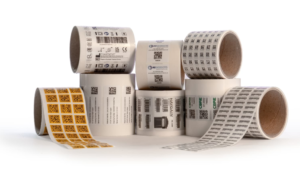
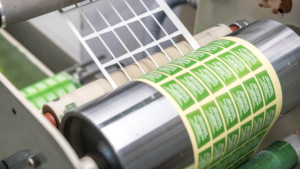
Barcode printers are used to generate barcode labels, tags, or stickers. These labels store encoded data such as product numbers, batch codes, serial numbers, or location identifiers. Once printed, the labels are applied to items, packaging, shelves, pallets, or assets.
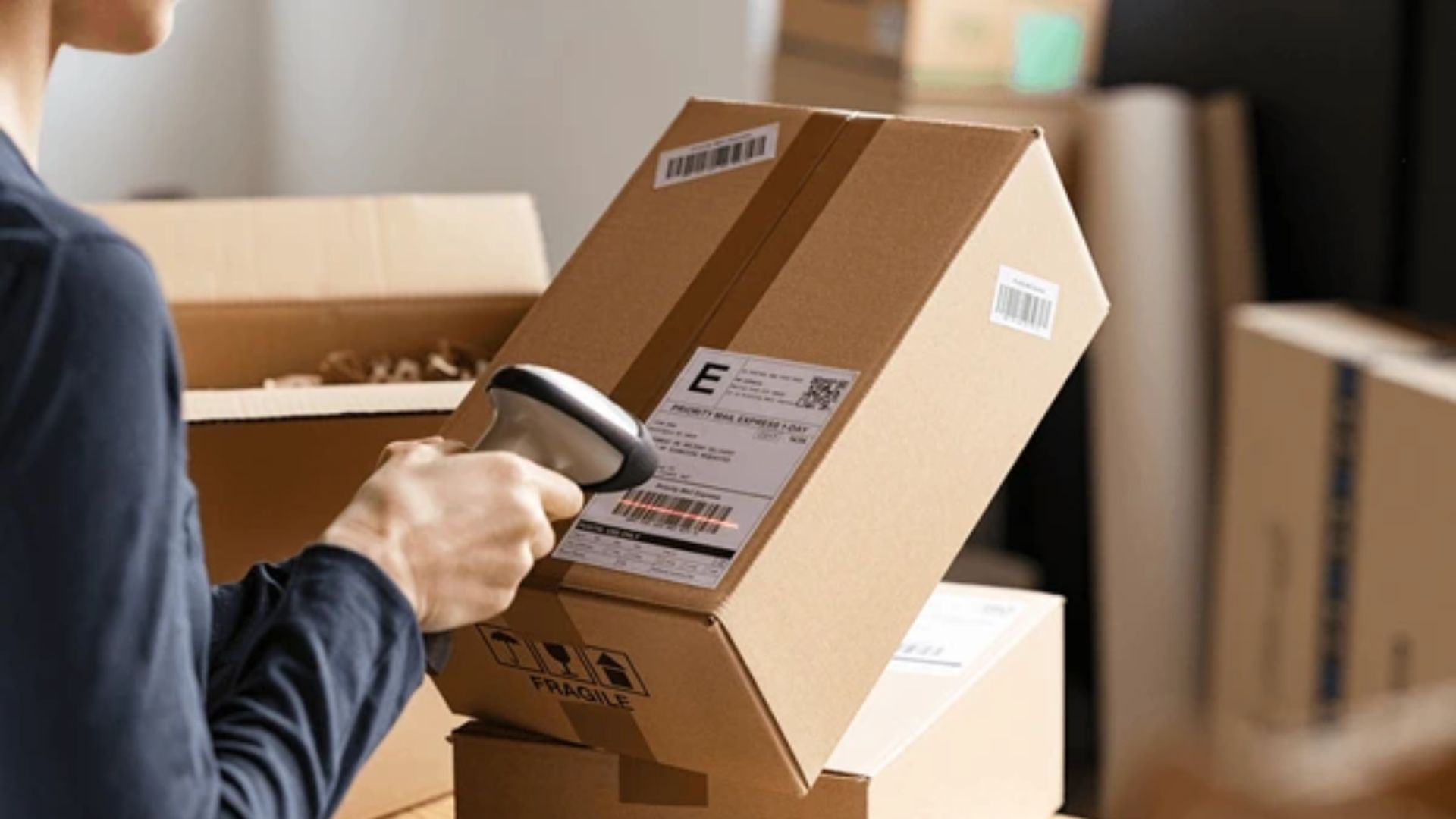
Barcode scanners are used to read those printed barcodes. When scanned, the encoded information is instantly captured and transmitted to a connected system, such as inventory software, ERP platforms, or warehouse management systems (WMS).
Together, barcode printers and scanners form a business barcode system that automates data capture and eliminates the need for manual entry.
Barcode systems are built on globally accepted standards for product identification and data capture.
Why Barcode Systems Are Essential for UAE Businesses
The UAE is home to fast-growing retail markets, large logistics hubs, free zones, manufacturing units, and service industries. In such environments, accuracy and operational efficiency are essential.
Businesses adopt barcode systems to address challenges such as:
- Manual data entry errors
- Inventory mismatches
- Slow stock movement
- Poor traceability
- Lack of real-time visibility
Barcode printers and scanners help solve these problems by creating a standardized, automated method of tracking items throughout their lifecycle.
How Barcode Printers and Scanners Support Inventory Management
1. Accurate Product Identification
Every product or asset receives a unique barcode. This barcode becomes the single reference point for that item across systems.
Whether it is a retail SKU, warehouse carton, manufacturing batch, or equipment asset, barcode labeling ensures consistent identification throughout operations.
2. Real-Time Inventory Updates
When items are scanned during receiving, storage, picking, or dispatch, inventory levels are updated instantly.
This enables:
- Accurate stock counts
- Reduced stockouts and overstocking
- Faster inventory reconciliation
- Better purchasing decisions
For businesses managing multiple locations or warehouses in the UAE, real-time updates are particularly valuable.
3. Faster Receiving and Dispatch
Barcode scanners significantly reduce the time required to verify incoming and outgoing shipments.
Instead of manually checking quantities, staff scan items to confirm:
- Correct products
- Accurate quantities
- Proper destination
This reduces delays, improves order accuracy, and supports higher throughput.
4. Inventory Audits and Cycle Counting
Barcode systems simplify inventory audits by allowing staff to scan items quickly instead of counting manually.
Cycle counting becomes more efficient, accurate, and less disruptive to daily operations.
Barcode Systems for Different Business Environments
Retail and Supermarkets
Retail businesses rely on barcode printers and scanners for:
- Product labeling
- Price management
- POS billing
- Stock replenishment
Barcode systems ensure smooth checkout experiences and accurate shelf stock levels, especially in high-traffic retail environments.
Warehousing and Logistics
Warehouses and logistics operations in the UAE handle high volumes of goods daily. Barcode solutions support:
- Location-based inventory tracking
- Pallet and carton identification
- Pick-and-pack accuracy
- Shipment verification
These warehouse barcode solutions improve productivity and reduce costly dispatch errors.
Manufacturing and Assembly Operations
Manufacturers use barcode systems to:
- Track raw materials
- Monitor work-in-progress
- Identify batches and lots
- Maintain traceability
Barcode printers and scanners help ensure quality control and compliance throughout production processes.
Asset Tracking and Facility Management
Beyond inventory, barcode systems are widely used for asset tracking.
Businesses track:
- Tools and equipment
- IT assets
- Office furniture
- Maintenance schedules
This improves accountability and reduces asset loss.
Types of Barcode Printers Used by Businesses
Selecting the right barcode printer depends on volume, environment, and application.
Desktop Barcode Printers: Used in retail stores, offices, and small warehouses. Suitable for moderate label volumes.
Industrial Barcode Printers: Designed for continuous, high-volume printing in warehouses and manufacturing facilities. Built to withstand dust, heat, and extended operation.
Portable Barcode Printers: Used in field operations, logistics, and mobile workflows where on-demand label printing is required.
Types of Barcode Scanners Used by Businesses
Handheld Barcode Scanners: Commonly used in retail, warehouses, and offices for flexible scanning.
Wireless and Bluetooth Scanners: Enable mobility and reduce cable constraints, especially useful in large facilities.
Industrial Barcode Scanners: Designed for rugged environments and heavy usage.
How Barcode Printers and Scanners Improve Business Efficiency
Reduced Human Error: Manual data entry is prone to mistakes. Barcode scanning ensures consistent and accurate data capture.
Improved Productivity: Tasks such as stock receiving, order picking, and audits are completed faster.
Better Decision-Making: Real-time inventory data supports forecasting, planning, and demand analysis.
Scalability: Barcode systems scale easily as businesses grow, add locations, or expand product lines.
Barcode Integration with Business Systems
Modern barcode solutions are rarely standalone systems. They integrate with:
- Inventory management software
- ERP systems
- Warehouse management systems
- Accounting and POS platforms
This integration ensures data flows seamlessly across departments and systems.
Choosing the Right Barcode Printing and Scanning Solution
Businesses should consider the following before implementing a barcode system:
Operational Volume: Daily print and scan volume determines whether desktop or industrial equipment is required.
Environment: Warehouses, outdoor operations, and manufacturing floors require durable hardware and labels.
Label Requirements: Label size, material, and durability must match usage conditions.
Software Compatibility: Barcode systems should integrate with existing business software to avoid data silos.
Common Mistakes Businesses Should Avoid
- Buying hardware without understanding workflow requirements
- Ignoring label material suitability
- Over-engineering solutions for small operations
- Failing to plan for future scalability
A well-planned barcode system avoids these issues and delivers long-term value.
Future of Barcode Systems in UAE Businesses
As businesses continue to digitize operations, barcode systems will increasingly integrate with:
- RFID technologies
- Cloud-based inventory platforms
- Advanced analytics
- Automation and smart warehouses
Barcode printers and scanners will remain a foundational element of data capture and tracking across industries.
Conclusion
Barcode printers and scanners are essential tools for businesses seeking accurate inventory management, improved tracking, and operational efficiency. When implemented as part of complete barcode printer and scanner systems, they provide real-time visibility, reduce errors, and support scalable growth.
For businesses operating in the UAE’s competitive and fast-paced markets, barcode-based inventory tracking is no longer optional — it is a strategic necessity.
About Barcode Solutions in the UAE
Many organizations across the UAE work with experienced Auto-ID solution providers to design and implement barcode systems tailored to their operational needs. Companies such as ARG label & technology FZE businesses by helping them select the right barcode printers, scanners, labeling materials, and system integrations based on industry requirements and workflows.
Barcode printers create labels, and scanners read them to track products, assets, and inventory accurately in real time.
Retailers, warehouses, logistics companies, manufacturers, healthcare providers, and asset-heavy businesses in the UAE use barcode systems.
They eliminate manual entry, reduce errors, and provide real-time stock updates across systems.
Desktop printers suit low volumes, industrial printers handle high-volume environments, and portable printers support mobile operations.
Yes, modern barcode scanners integrate with ERP, WMS, POS, and inventory management systems.