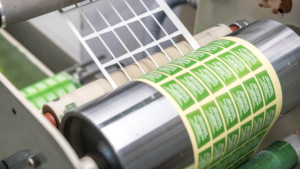
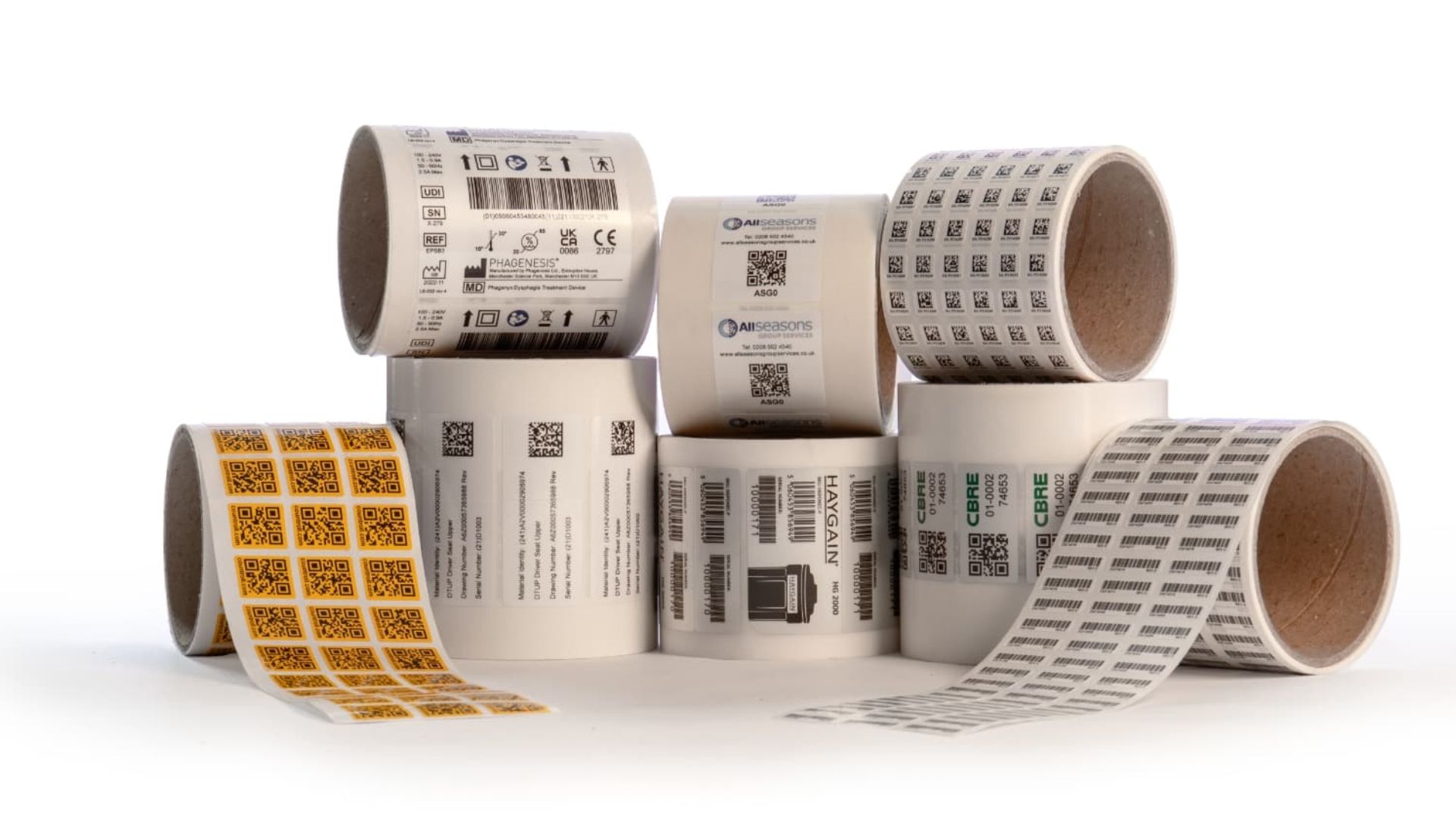
Modern industrial systems operate across production lines that move at high speed and across distribution networks that demand accuracy at every operational stage. Labels function as critical information carriers that guide products through manufacturing steps and storage cycles with clarity and control. When organisations scale operations, they face growing complexity across packaging processes and distribution workflows that require consistent identification methods. In such environments Labels Types shape how information travels across systems and how decisions are made at each operational checkpoint.
Industrial labelling influences traceability by connecting products to batches and tracking records that support accountability across supply chains. The process of labelling also affects the inventory control as the correct identification defines the method of counting, storage, and replenishment of the products that are managed within the structured working processes. Compliance requirements depend on clear labelling because regulatory information must remain visible under demanding physical conditions throughout product lifecycles. Engineers and operations teams must understand how labels respond to temperature, pressure, and repeated handling because material behaviour determines long-term reliability. When teams recognise these physical demands, they can design labelling systems that support operational stability and reduce avoidable disruptions.
The Function of Labels Across Workflows
Labels are applied across different touchpoints because each stage of the workflow demands a different purpose, along with a different material requirement. Labels used for identification carry details such as batch numbers, along with manufacturing dates and serial codes that help locate each product inside a supply chain.
Labels used for packaging carry outer-case data, such as barcodes, along with stock-keeping units that allow scanning systems to sort products quickly and accurately. Labels used for regulation carry safety instructions paired with expiry dates or QR codes that may be required by industry guidelines and customer compliance audits.
When teams do not separate these roles clearly, the same label gets used across use cases, which causes misreads or data loss under pressure and heat.
This is why engineers plan material composition based on Label Types that match the surface condition, adhesive strength, and expected lifecycle of each labelled item.
Labels used on cartons have different material tolerance compared to label types for products that stay on throughout the usage or direct consumer interaction. There are labels that are required to be endured until warehouse delivery, and those that require them to be resistant to sunlight, moisture, or friction in the retail store setting.
Once each label function is isolated, the team can define layout rules, font sizes, ribbon chemistry, or barcode field width as per scanner calibration settings. By treating function as the first layer of classification, businesses can structure their Label Types into operational groups that support real-time scanning and traceable movement.
The result is greater accuracy in identification across packaging lines, plus fewer errors caused by peeling corners or unreadable data near sorting points.
How Label Function Influences Material Choice
Material selection is not an aesthetic choice. It begins with the label’s expected role across handling, scanning, and environmental conditions within a defined shelf life.
Labels placed inside freezers face different challenges compared to those attached to warm cartons stacked in outdoor yards or high-rack warehouse units. When moisture is present, the adhesive must bond instantly before condensation forms, while the surface film must resist curling caused by temperature change.
Labelling stored around loading bays can be rubbed against by pallets and trolleys and result in damage to printed surfaces and barcodes becoming unreadable during transit. Chemical resistance also affects substrate decisions, especially in cleaning zones, pharma packaging, and containers that contact oils, solvents, or diluted acids during movement.
Each of these conditions influences how engineers define Label Types that match their actual role and location inside the operational cycle.
Even the printing method plays a role. Labels used in direct thermal systems are limited by heat sensitivity and are not suitable for long-term scanning or archiving.
Thermal transfer printing offers better durability by embedding ink into the label surface using resin or wax-resin ribbons across compatible film-based substrates.
When selecting Label Types, teams must match label construction to function, not visual appeal or price point, to reduce replacement cycles and scan errors. For longer life packaging, the label must also survive exposure to water and abrasion while maintaining the clarity of printed text and barcode data.
These are the same functional considerations that define different types of labels used in packaging, especially when labelling lines run at high speed or apply labels mechanically.
Use the following checklist to help decide on substrate fit:
Checklist for choosing substrate based on expected label life:
- Define the environment where the label will live, including exposure to cold, heat, friction, or direct sunlight.
- Identify cleaning or chemical contact surfaces that may interact with the label over time.
- Choose the correct print method depending on the expected scan frequency or storage duration.
- Assess shelf life and product lifecycle before selecting adhesives or films.
- Verify surface compatibility to prevent peeling, curling, or adhesive failure during high-speed application.
The Material Science Behind Label Construction
Every label begins with a decision around materials because performance depends on how well the substrate responds to mechanical stress plus environmental exposure. When labels are used across long product cycles or exposed to temperature shifts, they begin to reveal the limits of their construction and surface compatibility.
Different Label Types exist to solve these use cases, but each starts with selecting a material that can carry print while maintaining adhesion under pressure.
Labels applied to flat surfaces require different bonding strength compared to labels that are placed on curved or textured surfaces during fast-paced packaging.
Each material group behaves differently depending on the surface energy of the container, plus the printing method and ribbon system used for application.
The four most commonly used substrates are paper, polyethylene, polyester, and silver metallised film, each with its own defined performance boundaries in use.
Material Comparison Table
| Material | Strengths | Limitations | Typical Use |
| Paper | Supports crisp printing along with low-cost production. | Cannot tolerate moisture or abrasion during transit. | Used for dry goods and short-term inventory labels. |
| Polyethylene (PE) | Offers flexibility paired with moisture and tear resistance. | May stretch or deform under heat or packing pressure. | Applied on squeezable bottles and cold-storage packaging. |
| Polyester (PET) | Maintains shape during abrasion plus repeated handling. | May not bond well to curved or irregular surfaces. | Preferred for chemicals, drums, or outdoor assets. |
| Silver Metallised Film | Provides high scan clarity plus long-term visual contrast. | Reflectivity can interfere with certain barcode readers. | Used in electronics, long-life parts, and asset tagging. |
Each of these falls under specialised industrial label types that are chosen based on longevity, handling cycles, and resistance to external stressors over time.
Label construction also involves adhesive choice, which ranges across permanent, removable, and high-tack formats depending on substrate behaviour and retention needs. Permanent adhesives are made to attach to plastic or cardboard, whereas removable ones can be used to reposition during the labelling process without a residue being left behind.
High-tack adhesives are used when label failure would disrupt scanning accuracy or introduce safety risks in warehouse or consumer-facing environments.
Backing liners also influence how smoothly labels are dispensed or printed during industrial cycles, especially when using high-speed thermal printers and label applicators. Backing liners are selected to maintain label shape, prevent curling, and reduce resistance across feed rollers when automated dispensing systems are involved.
Each of these material factors works together to define functional Label Types that serve high-volume industries where stability and clarity cannot be compromised.
Printing Technologies and Their Technical Profiles
Label performance depends not only on the material used but also on how the data is applied during the printing process in real production settings.
Each printing method has its own impact on durability, scan readability, and the clarity of information printed on different Label Types during fast-paced labelling runs.
Thermal Transfer Printing
This method uses a thermal printhead that heats a ribbon, which then transfers ink onto the label surface based on the ribbon’s composition. Wax ribbons are used where abrasion resistance is not required and where labels are not exposed to moisture or chemical interference after application.
Resin ribbons provide stronger bonding and are selected when surface durability is required, along with long-term barcode readability on curved or uneven packaging. Wax-resin blends offer balanced durability and are used in product identification where resistance plus flexibility are both essential for day-to-day scan environments.
Direct Thermal Printing
This method uses heat-sensitive labels without ribbons, which darken where the printhead applies heat across defined layout zones and barcode fields. Direct thermal labels require no ink or toner but are vulnerable to fading if exposed to light, friction, or high temperature after printing is completed. This method is suitable for applications where the label is read within a short timeframe and then discarded during sorting or shipping.
Printer Resolution and Barcode Clarity
Resolution affects the legibility of types of barcode labels, especially when scanners are used at a distance or where label size is constrained by product dimensions. Low-resolution printers may bow the edges of barcodes and reduce the scan rate of barcodes, but high-resolution printers may put ink precisely on small bars or rotating fields.
High-speed settings require ribbon feed, label placement, and pressure on the printhead to ensure ghosting or fading of the print do not occur when repeating the print. Choosing the correct printing method depends on the application’s required label life, surface material, ribbon type, and how the label is expected to perform in real time.
Barcode Symbology and Data Fidelity
Barcode design impacts more than tracking. It affects how quickly data is read and whether that data can survive the entire product lifecycle. All barcode formats are intended to serve a distinct purpose depending on the amount of data to be stored and the scalability of that data to be scanned.
Print quality, scanner compatibility, and label substrate all contribute to whether a barcode performs well or fails during storage, transport, or high-speed sorting. Engineers do not select formats randomly. They choose based on layout space, scanner orientation, label function, and how much data needs to be stored per unit.
Some formats focus on readability while others prioritise density. The right match depends on the label’s size, surface, and how frequently the item will be scanned. Different types of barcode labels offer different results depending on the hardware used, and some require higher contrast or resolution to prevent misreads.
Poorly matched barcode formats increase scanning time, which can delay processing and damage productivity in warehouse or dispatch operations.
Here is a technical comparison of commonly used barcode formats:
| Barcode Format | Data Density | Typical Use | Print Considerations |
| Code 128 | Moderate data storage across numeric plus text | Used in retail boxes plus warehouse applications | Requires clean print with accurate bar spacing across flat surfaces. |
| GS1‑128 | Structured format with identifier fields | Used in shipping, logistics, plus batch tracking systems | Requires exact positioning along with standardised layout structure. |
| QR Code | High-density square grid for compact data delivery | Used on marketing packaging plus consumer scan points | Requires contrast plus adequate white space around all four corners. |
| DataMatrix | Extremely dense 2D format for small surface areas | Used in electronics, tools, and compact labels | Performs best on matte surfaces using high-resolution thermal transfer print. |
The substrate must match the scanning method. Glossy materials may reflect scanner beams, which reduces scan success and increases the number of failed reads.
The printing method also matters. Resin ribbons work best when clarity and permanence are critical across Label Types designed for long-duration tracking. Where barcode reliability matters most, printer resolution, ribbon selection, and surface material must all be configured as part of the label planning process.
Application Environments Across Industrial Use Cases
Every industrial label operates inside an environment that presents unique challenges across temperature, friction, light, or chemical exposure during its complete service life. When label performance is assessed in isolation, teams often overlook how material, adhesive, and print method respond to the actual conditions on-site.
The right Labels Types can only be selected when the application setting is fully mapped, including the location of the label, its orientation, and handling frequency.
Labels applied in retail stores are subject to different pressures compared to those used in cold chain trucks or steel-pallet warehouses exposed to daily abrasion. Durability depends on both the material properties and the ability of that material to retain printed information under real conditions like condensation, UV light, or solvents.
These are examples of real-world use cases that rely on carefully engineered Labels Types matched to exacting industry requirements:
- Cold chain logistics and freezer labels: Labels in frozen environments must bond within seconds before frost builds up and must resist curling or flaking as the product changes temperature.
- Warehouse pallet labelling and abrasion: Manual or automated storage labels should be able to endure pulling, compression, and recurring collisions with racks and trolleys in the packing and retrieval processes.
- Chemical plants and solvent exposure: Labels must remain intact despite chemical splashes, vapour presence, or contact with cleaning fluids while protecting print clarity under variable humidity.
- Retail packaging and shelf aesthetics: Labels must maintain shape and colour under direct light exposure while also supporting brand visuals plus scannability across multiple packaging surfaces.
- Electronics and traceability: Labels in electronics manufacturing must store traceable data within limited surface area and must withstand heat, static, and label peel testing protocols.
- Automotive manufacturing and high-heat exposure: Labels applied during part assembly must survive under-the-hood temperatures or contact with grease plus surface friction without compromising identification fields.
Across these sectors, industrial label types are engineered for performance rather than appearance, with each one tested against heat cycles, solvents, or repeated mechanical stress.
Choosing Labels Types without defining these real-world conditions often results in label failure, data loss, or scanning delays that disrupt daily plant operations. Only when performance expectations are clearly linked to application environments can labels support continuous flow, safety verification, and system-wide reliability.
Quality Assurance and Testing Standards for Labels
No industrial labelling process is complete until the product has passed through structured testing that reflects how it will behave across its intended lifecycle. Label failures are often caused by overlooked variables like friction, thermal shifts, or substrate mismatch that go undetected without performance-based verification protocols.
Testing helps engineers classify Labels Types not just by material or adhesive but by how they hold up under actual stress and real handling conditions. These tests are not decorative. They are practical indicators of whether the label will maintain data clarity and structural integrity under pressure or repeated use.
Each test corresponds to an environmental factor and supports long-term decisions for storage, transit, or application-specific usage in structured production lines.
Engineers dealing with industrial label types use these results to categorise labels according to stress resistance rather than aesthetic grade or pricing tier. Testing requirements often vary by region or industry, but the following three are considered foundational across all label categories and environments:
Standard label tests used in industrial environments:
- Tape adhesion test: Measures how well a label bonds with the surface after controlled pressure is applied during normal industrial conditions.
- Scuff and abrasion test: Simulates warehouse friction or conveyor belt contact to measure how much surface damage affects barcode readability and adhesive exposure.
- Tensile and peel strength test: Evaluates whether the label can resist tearing or edge-lift caused by manual handling or machine contact during production.
Test results guide further label selection decisions, such as liner type, application equipment, or print compatibility across temperature-sensitive or solvent-heavy use cases.
When these tests are built into label procurement cycles, organisations reduce error rates, scanning issues, and the operational cost of re-labelling.
Choosing Between Pre‑printed, Sequential, and Custom Label Runs
Label production planning depends on both how data is applied and how that data is expected to function across the packaging and supply chain lifecycle.
Some teams rely on pre‑printed designs for high-volume consistency, while others need on‑demand print systems to support variable content or batch-level traceability. Each label run type comes with trade‑offs in cost, accuracy, lead time, and material waste, especially when scaled across daily packaging workflows.
Planning starts with defining Label Types that serve product identification, outer packaging traceability, or compliance declarations at a unit, carton, or pallet level. When artwork is fixed and identical across thousands of units, pre‑printed labels reduce cost per piece while improving colour consistency and layout control.
When real‑time tracking is required, sequential labels support dynamic coding by generating numbers that connect each item to a unique serial or batch reference. Custom label formats support variable data fields, alternate artwork, and internal part numbers, which are required for specific label types for products in regulated sectors.
Custom jobs may include layout adjustments, language changes, icon placements, or core size modifications based on the printer used and the applicator type.
Here is a practical comparison of label run types and how they affect technical performance:
Comparison across label production options:
- Pre‑printed labels: Offer consistency plus lower unit cost, but lack flexibility for changes during packaging or after inventory shifts.
- Sequential labels: Enable full traceability and reduce tracking errors, but depend on printer accuracy and ribbon compatibility for scan reliability.
- Custom label runs: Support multi‑version layouts across departments, but increase planning time, unit cost, and changeover effort for shorter runs.
Selecting the correct Label Types depends not only on design goals but on how the label interacts with barcode scanners, users, and system databases in daily use.
Integration with Industrial Label Applicators and Scanners
Industrial labelling environments demand precision across both machine interaction and scanner readability to avoid disruptions in throughput or data logging accuracy. Most failures in automated labelling stem from a mismatch between the label roll, applicator calibration, or scanner protocol rather than flaws in adhesive or print quality.
Label specifications must match sensor requirements and roll mechanisms to maintain uninterrupted flow through applicators, conveyors, and scanner arms.
Planning for Label Types is not just about visual design or material durability, but also about how cleanly they align with mechanical and software interfaces. For barcodes to register properly, label placement must remain consistent, along with the gap detection and peel point on each print-and-apply cycle.
Low-contrast codes or edge-misaligned labels often break the scan chain, which then leads to manual overrides or scan rejection delays. Each of the following points helps maintain compatibility with applicators, scanners, and automated systems used in packaging or fulfilment environments:
Compatibility checks across machine labelling systems:
- Applicator interface with label roll specs: Machine settings must align with core size, roll tension, and unwind direction to prevent misfeeds or misalignment.
- Sensor calibration and label gap detection: Clear detection of the gap between labels ensures that print heads do not misfire or skip cycles during runs.
- Scanner read protocols and label placement precision: Labels must be centred along with barcodes aligned to scanner beams to ensure successful reads every time.
- System validation to avoid misreads and downtime: Automated checks confirm barcode readability across all types of barcode labels before routing products further downstream.
Reliable data flow across scanners and applicators depends on planned integration, not last-minute adjustments, especially in high-volume, traceability-driven environments.
Practical Checklist Before Label Rollout
Planning the final deployment of labels is a technical process that must account for conditions across supply chains, packaging lines, and handling methods. A structured checklist ensures every label design is tested for durability, clarity, and compatibility across the types of labels used in packaging environments.
Before releasing large volumes across production lines, label engineers should verify the following checkpoints across label design, application, and system behaviour. Each label type for products must perform under the same real-world stress as seen in its retail or industrial lifecycle.
The following checklist offers a grounded reference before rollout for any project involving critical label types:
Pre-deployment checklist for label types:
- Confirm environmental stressors: Assess exposure to heat, along with moisture and chemicals, to validate whether the selected label material can endure full lifecycle conditions.
- Verify material compatibility with surface: Label adhesion should remain stable on metals, plastics, or fibreboards without peeling or distortion during shipping or handling.
- Ensure print technology matches necessary resolution: Barcodes and symbols must be legible without bleeding or pixellation across both high-resolution laser printers and thermal print heads.
- Validate barcode readability with the intended scanner: Scanning must work without retries using your production scanner’s beam width and orientation for the target barcode size.
- Test adhesive retention over time: Apply samples across mock production surfaces and assess adhesion integrity after storage, vibration, and basic stress cycles.
- Assess roll specifications with dispensers: Make sure label roll diameter, core size, and unwind direction match machine feeders without manual intervention or jamming risk.
- Validate regulatory text legibility: Fonts for mandatory details must meet size and contrast standards across all selected label types before entering compliance review.
A procedural checklist like this reduces cost risk, avoids downtime, and increases label consistency throughout long-term product runs.
Summarising Practical Value and Next Steps
Across production, logistics, and retail applications, clarity around label types supports better planning, faster approvals, and lower production risk. When teams understand how label material, adhesive, print method, and barcode format affect the product lifecycle, fewer errors reach the market. Each decision made during label development has a long-term impact on how your item is identified, tracked, or stored.
For brands working in UAE markets, working with a technically specialised partner like Argintlfze Label & Technology FZE ensures that every roll matches both print and application specifications. Whether you need permanent label stocks for export, temperature-resistant materials for pharmaceuticals, or fast-scan barcodes for FMCG rotation, technical alignment matters. Review your current label specs, map requirements across departments, and then reach out to a trusted engineering-led custom labels manufacturer.
FAQs
Labels used in engineering-led workflows must meet stricter technical standards than standard packaging applications or retail stickers.
Each label type selection impacts traceability, scan fidelity, surface compatibility, and lifecycle performance under environmental stress. Below are five technical questions commonly asked during label sourcing or pilot testing.
Synthetic face stocks like BOPP or PET maintain integrity during long-term exposure to sub-zero temperatures along with repeated freeze-thaw cycles.
Paired with freezer-grade acrylic adhesives, these labels resist edge curling plus remain readable when moisture condenses on the surface.
The number of characters, scanner angle, and print area help determine if 1D or 2D formats are viable for your application.
Linear barcodes work well across wide conveyor setups, while QR or DataMatrix formats are preferred for compact products or circular scans.
Thermal transfer printing provides sharper contrast on small labels used for serialisation or asset tagging due to resin ribbon performance on coated synthetics.
This technology supports dense codes without smudging, along with delivering consistency across large production runs.
Permanent adhesives remain stable across metals and glass, while removable classes lift easily under heat or flexed surfaces.
Each label type requires separate adhesive testing across production, storage, and transit to prevent mid-cycle delamination.
Sensor windows should register at least 2 mm of gap between labels to ensure correct triggering on applicators or inline scanners.
Too narrow a margin may cause skipped prints or unreadable scans, especially for tighter label types or rolls.